
Kits AI: review, pricing and alternatives
What is Kits AI? An Overview
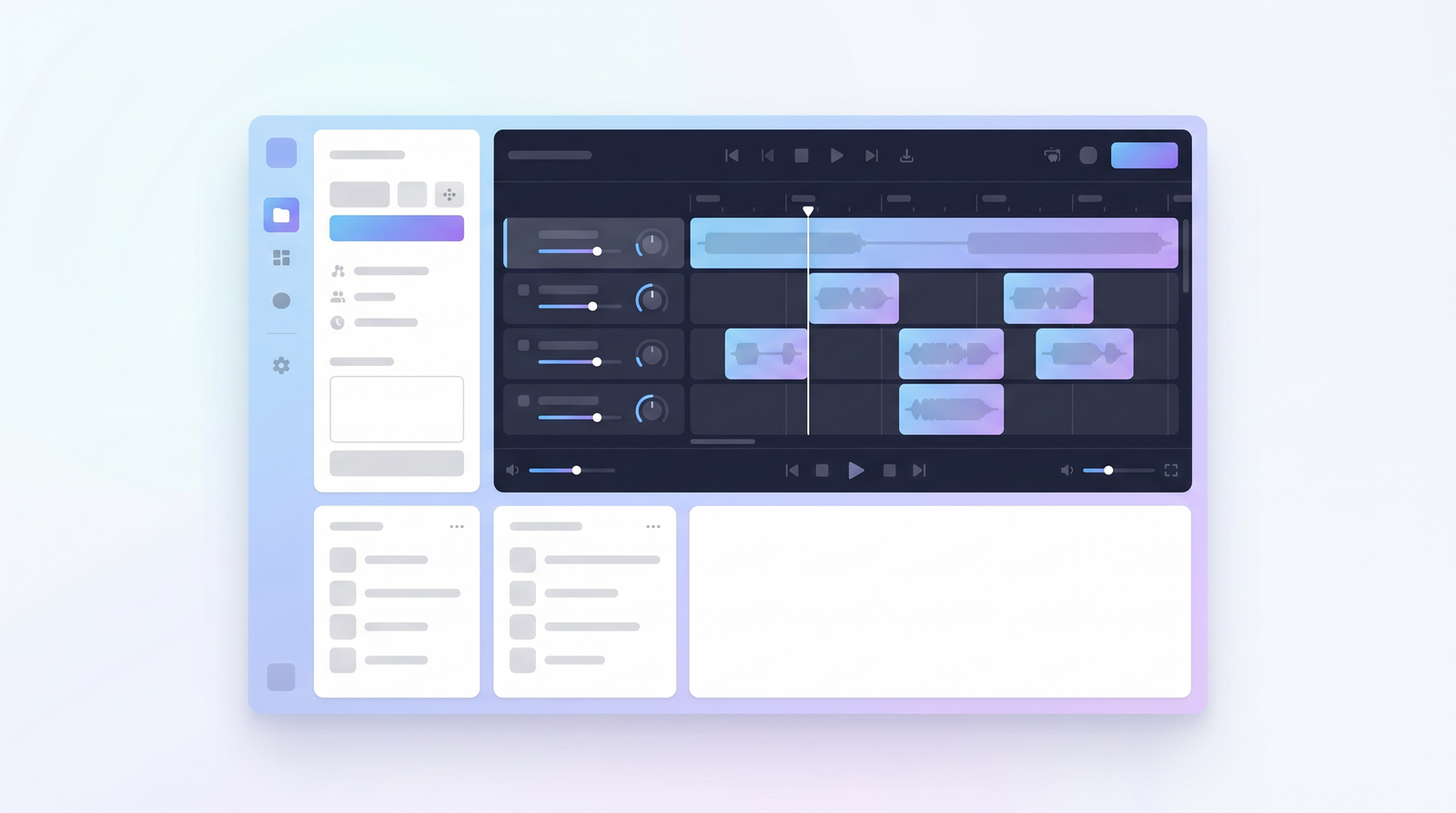
When I first stumbled upon Kits AI, it presented itself as a truly ambitious project: an AI audio tool specifically designed for music creators. Its core promise is to revolutionize how we approach vocal and instrumental tracks, offering a suite of features that aim to streamline workflows and, in their own words, democratize music creation. The idea is to bring studio-quality results within reach of anyone, regardless of their budget or access to traditional recording resources.
At its heart, Kits AI positions itself as a solution for music producers and artists looking to innovate or simply make their creative process more efficient. Imagine being able to conjure a custom singing voice for your track without hiring a vocalist, or having an AI play an instrument with perfect precision. That's the vision Kits AI sells. It claims to be an all-in-one platform for generating AI vocals, cloning voices, and even producing entire musical pieces.
The platform was founded by musicians Evan Bogart and Jesse Frasure, which initially gave me some confidence. Their background suggested they understood the pain points of the industry and were building a tool that genuinely addressed them. The initial buzz was about its potential to offer over 100 royalty-free AI voices and custom voice training capabilities, making it sound like a powerful ally for independent artists and established producers alike.
From my perspective, the stated purpose of Kits AI—to simplify complex audio tasks and open up new creative avenues—is incredibly appealing. The concept of an AI taking over some of the more arduous parts of music production, like vocal tuning or finding the perfect voice, is a dream for many. The question, of course, is whether the execution lives up to this grand vision.
Key Features and Capabilities
Diving into Kits AI, I quickly identified its main offerings, which on paper, sound quite impressive and comprehensive for an AI audio tool. The feature set is designed to cover a broad spectrum of needs for music production, from vocal manipulation to instrumental generation, all with the promise of studio-quality output.
One of the standout capabilities is its AI voice cloning. The idea here is that you can take an existing voice and create an AI model from it, allowing you to then have that cloned voice sing new melodies or lyrics. This is a game-changer if it works reliably, as it could eliminate the need for re-recording or allow artists to experiment with different vocal styles using their own voice as a base. Closely related to this is voice conversion, often referred to as voice-to-voice. This allows you to take an existing vocal performance and transform it into a different voice model available on the platform, preserving the original emotion and nuances of the performance while changing the timbre.
Beyond just cloning and conversion, Kits AI aims to let you sing in various styles using its library of AI voices. This means you could input a melody or a spoken word, and the AI would render it in the style of a pop singer, an R&B artist, or even a rock vocalist. The platform also boasts the ability to 'play any instrument,' which suggests it can generate instrumental tracks or parts based on user input, though the primary focus remains vocals. Another practical feature is vocal isolation, which can be incredibly useful for remixing or extracting vocals from existing tracks.
Finally, a significant selling point is the claim of 100% royalty-free content. This is a crucial detail for artists and producers concerned about licensing and usage rights, promising that anything created with Kits AI's provided models can be used without additional fees or legal headaches. The platform offers a diverse range of AI voice models, from 'Pop Female (English, LoFi)' to 'Soul Male (English, Neo),' indicating an attempt to cover a wide array of genres and vocal characteristics.
How Kits AI Works: The Technology Behind the Vocals
Understanding how Kits AI operates reveals a fundamental difference in its approach compared to some other AI vocal tools out there. While many platforms focus on text-to-singing, where you input lyrics and the AI generates a vocal performance from scratch, Kits AI primarily functions as a voice-to-voice converter. This distinction is key to its philosophy and, as I've observed, to its strengths and weaknesses.
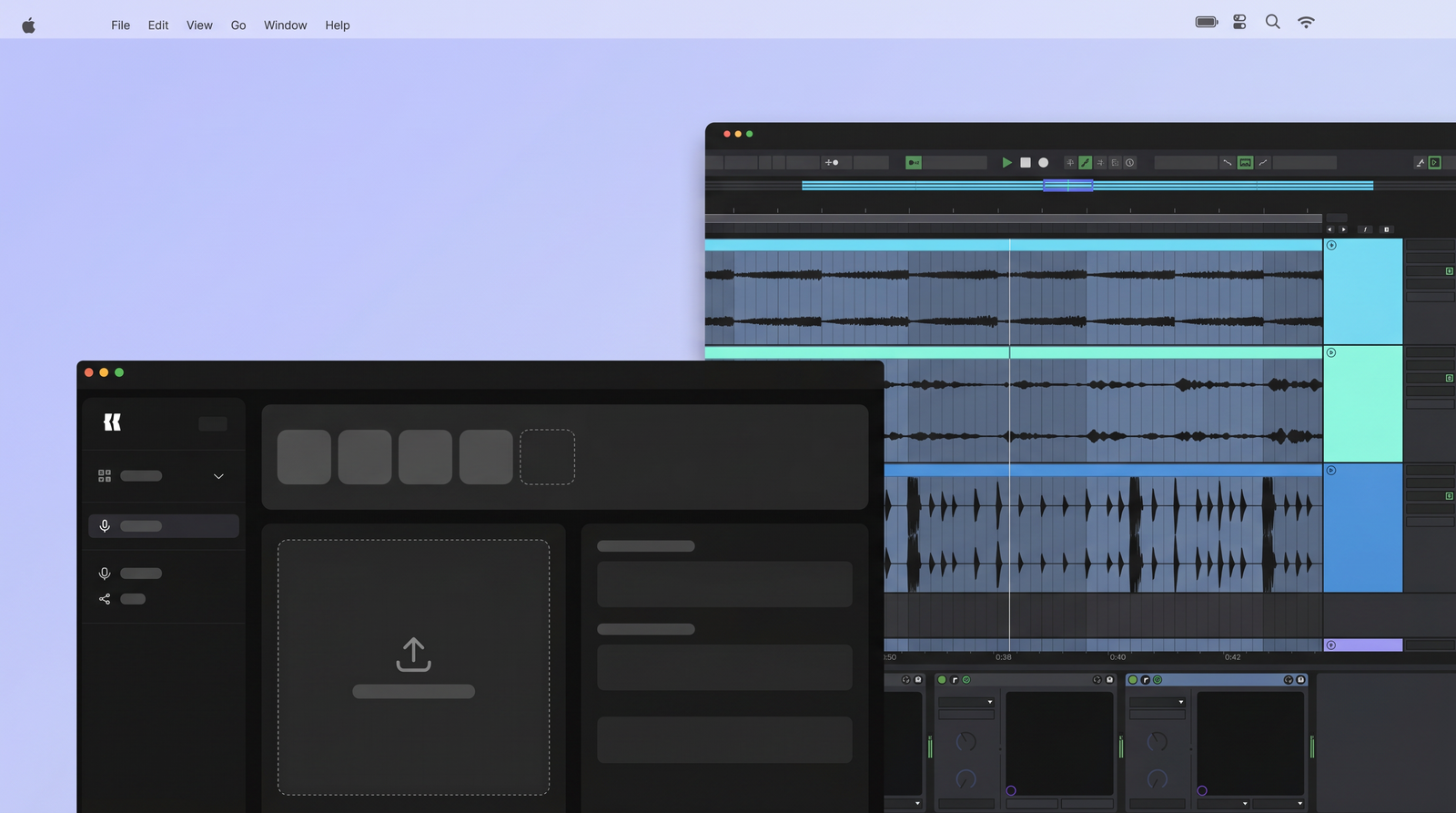
The core of Kits AI's technology is its proprietary KVC (Kits Voice Conversion) system. Instead of generating vocals from text, KVC takes an existing recorded vocal performance and transforms it into a new voice. The stated goal here is to preserve the intricate nuances, emotional delivery, and performance integrity of the original recording. So, if you have a perfectly sung melody but want it in a different voice, Kits AI aims to transmute that performance into another timbre without losing the original's expressive qualities. It's less about creating a vocal from nothing and more about re-skinning an existing one.
This voice-to-voice approach relies heavily on a proprietary dataset. Kits AI claims this dataset is built from hand-processed vocals contributed by compensated artists. This is an important ethical point, which I'll touch on later, but from a technical standpoint, it means the AI is trained on a rich, curated library of human vocal performances. When you convert a voice using Kits AI, you're essentially drawing from this carefully constructed library of vocal characteristics and applying them to your input. While Kits AI does offer a text-to-voice feature, it's typically positioned behind premium tiers, reinforcing that their main expertise and reputation are built on the KVC system.
In essence, Kits AI isn't trying to teach an AI to be a singer from scratch based on text. Instead, it's teaching an AI to expertly mimic and transfer vocal characteristics between existing performances. This implies a focus on maintaining the human element of a performance, which theoretically should lead to more natural and less robotic-sounding results than pure text-to-singing models, though user experiences, as we'll see, sometimes tell a different story.
Pricing Structure and Value for Money
Navigating the pricing structure of Kits AI is where many users, myself included, start to feel a bit of friction. While the promise of studio-quality AI tools is enticing, the cost associated with unlocking its full potential, and even basic functionality, can be a point of contention. The platform operates on a tiered subscription model, with prices generally ranging from around $9.59 to $59.99, depending on the plan and whether you opt for monthly or annual billing.
What quickly becomes apparent is that many of the most appealing features are paywalled, or at least heavily restricted in the free or lower-tier plans. Voice cloning, for example, a feature that initially drew a lot of attention, now typically requires a paid subscription. Similarly, the ability to download your generated audio, which one would assume is a fundamental part of any audio tool, is often severely limited or entirely paywalled. I've seen multiple user complaints echoing this sentiment, with some feeling that they're being asked to pay a 'fortune' for just a few minutes of usable audio.
This aggressive paywalling contrasts sharply with the user experience. Many users report a disconnect between the price they're asked to pay and the actual value delivered in terms of quality and reliability. The recurring theme in feedback is that despite the premium pricing, the output quality often falls short of the 'studio-quality' claims, leading to frustration and a feeling that the investment isn't justified. It makes me wonder if the pricing model was set before the technology matured enough to consistently deliver on its promises.
While there might be occasional discount codes, like a 20% off for the first month, these temporary reductions don't address the underlying issue of perceived value. For a tool aiming to democratize music creation, placing essential features behind significant paywalls, especially when the output quality is inconsistent, can alienate the very audience it seeks to empower. It forces users to weigh the cost against a product that, for many, isn't consistently meeting expectations.
| Plan | Price (Approx. Monthly) | Best for |
|---|---|---|
| Basic/Starter | $9.59 - $19.99 | Casual experimentation, limited use |
| Pro/Creator | $29.99 - $39.99 | More frequent use, access to advanced models |
| Unlimited/Studio | $49.99 - $59.99 | Heavy users, full feature access including voice cloning |
User Experience: Performance and Quality Concerns
This is where the rubber truly meets the road for Kits AI, and unfortunately, it's also where I've encountered, and observed others encountering, significant frustrations. Despite the ambitious claims of 'studio-quality' output, the actual performance and resulting audio quality are frequently cited as major pain points by users across various platforms, including Trustpilot where it currently holds a rather dismal 1.7/5 rating.
A recurring complaint revolves around the robotic and unnatural sound of the generated voices. While the voice-to-voice conversion aims to preserve human nuance, the reality often falls short. Instead of a seamless transformation, users report voices that lack the organic flow and emotional depth expected from a human performance. This isn't just a minor imperfection; it can fundamentally undermine the artistic intent of a track.
Beyond sounding robotic, the AI vocals are prone to more severe artifacts. I've seen and heard instances of voice cracking and distortion, particularly when the AI attempts to hit higher or lower notes, or when dealing with complex vocal runs. This makes the output sound amateurish and unusable for professional contexts. Coupled with this is often poor pitch accuracy, where the AI struggles to stay perfectly in tune, rendering vocals 'off-key' and requiring extensive manual correction, which defeats the purpose of an AI tool designed to streamline workflow.
The inconsistency in quality is also a major issue. One might get a decent result with one voice model and input, only to find another combination yields completely unusable audio. This unpredictability makes it difficult to rely on Kits AI for any serious production work. Furthermore, technical glitches add to the frustration. Users have reported download failures, where after spending time generating an audio track, they're unable to retrieve the final file, leading to wasted time and effort. As one verified Trustpilot user succinctly put it, "The voices cannot hit the notes, it cracks, gets distorted or out of tune. Frustrating and such a waste of time especially when you are on a serious time crunch." This sentiment perfectly encapsulates the gap between promise and delivery.
Pros and Cons: A Balanced Look
After spending time with Kits AI and sifting through extensive user feedback, I've come to a pretty balanced, albeit critical, perspective. On one hand, the potential of the platform is undeniable, and there are aspects that genuinely impress. On the other, the execution often leaves a lot to be desired, leading to significant user frustration.
The primary 'pro' for Kits AI is its ambitious vision and the sheer potential it represents. The idea of easily creating custom voices, singing in any style, or even having an AI play an instrument with the click of a button is truly groundbreaking. When it works, even partially, it can indeed streamline aspects of music production, allowing for rapid prototyping or experimentation without the traditional constraints of hiring vocalists or mastering new instruments. The concept of 100% royalty-free models is also a huge plus for independent artists looking to avoid licensing headaches.
However, the list of 'cons' is unfortunately more extensive and impactful. The most glaring issue is the inconsistent quality of the AI-generated vocals. Users frequently report robotic sounds, cracking, distortion, and poor pitch accuracy, making many outputs unusable for professional-grade music. This directly contradicts the 'studio-quality' claim. The aggressive paywalling is another major sticking point; features that should be standard, like reliable downloads or voice cloning, are often restricted, leading to a feeling of being nickel-and-dimed for an underperforming product. Technical glitches, such as download failures, further compound the frustrating user experience. It's clear that while the ambition is high, the current state of the technology often fails to deliver on its promises.
"The platform has evolved from a promising community-driven tool into what many users now describe as a 'cash grab' that prioritizes profits over user experience."
In summary, while Kits AI aims for the stars with its feature set and promises of creative liberation, its current performance and business model create a significant barrier to entry and ongoing satisfaction. It's a tool with immense potential, but one that currently struggles with fundamental issues of quality and value for money.
- Pros:
- Ambitious vision for AI music creation.
- Potential to streamline production workflows.
- Promises 100% royalty-free content.
- Voice-to-voice conversion concept is powerful.
- Cons:
- Inconsistent and often poor vocal quality (robotic, cracking, distortion, pitch issues).
- Aggressive paywalling of core features.
- Frequent technical glitches (e.g., download failures).
- Perceived low value for money by many users.
- Frustrating user experience.
Kits AI vs. The Competition: Soundverse and Beyond
When evaluating AI vocal generators, it's crucial to understand the different philosophies at play, and Kits AI's voice-to-voice approach sets it apart from some key competitors, notably Soundverse. This distinction isn't just a technical detail; it profoundly impacts how each tool is used and what kind of results you can expect. You can see how it stacks up against alternatives on Top10k.
Kits AI, as we've discussed, operates primarily as a sophisticated voice-to-voice converter. Its KVC system is designed to take an existing vocal performance – complete with all its nuances, inflections, and emotional delivery – and transform it into a different voice model. The goal is to preserve the integrity of the original performance while changing the timbre. This means you need a pre-recorded vocal track to begin with. It's ideal if you've got a great singer but want to experiment with different vocal identities, or perhaps if you want to use your own performance but hear it in a different style without having to re-sing.
Soundverse, on the other hand, embraces a text-to-singing philosophy. With Soundverse, you start with lyrics and specify style parameters, and the AI generates a complete vocal performance from scratch. It interprets the lyrical flow, emotional context, and genre conventions to produce vocals that never existed before. This approach is fantastic for songwriters who might not have access to a vocalist, or for producers who want to rapidly prototype vocal melodies and lyrics without any live recording. It offers a different kind of creative freedom, building from the ground up rather than transforming an existing performance.
So, the choice between Kits AI and something like Soundverse really boils down to your starting point and creative needs. If you have a solid vocal take and want to experiment with different voices or styles while retaining that original performance, Kits AI's voice-to-voice conversion is theoretically the stronger option. If you're starting with just lyrics and a melody idea and need an AI to generate a vocal performance out of thin air, Soundverse's text-to-singing capability would be more appropriate. Both aim to democratize music creation, but they do so through fundamentally different technological pathways and cater to distinct workflow preferences.
Who Should Use Kits AI? Ideal Users and Use Cases
Given its stated capabilities and its actual performance, identifying the ideal user for Kits AI becomes a nuanced task. The platform clearly targets music producers and artists who are looking for innovative ways to create and manipulate audio. Its ambition is to simplify the creation of custom voices, generate AI music covers, and generally streamline the music production process. But does it truly meet their needs?
Initially, a producer might be drawn to Kits AI for its promise of voice cloning. Imagine being able to create an AI model of your own voice, or a session singer's voice, and then use it to sing new melodies without needing to re-record. This could be incredibly useful for demos, quick revisions, or even for generating backing vocals. Similarly, the ability to create AI music covers by converting an existing vocal performance into a new voice model seems like a creative playground for remixers or cover artists. The idea of experimenting with different vocal styles on a single track without any human vocal input other than the initial performance is very appealing.
However, the recurring issues with quality—the robotic sounds, cracking, distortion, and poor pitch accuracy—mean that Kits AI is currently better suited for specific, less critical use cases. It might serve well for early-stage ideation, quickly testing a melody with a different vocal timbre, or creating rough demos where pristine vocal quality isn't the absolute priority. For hobbyists or those just starting out who want to experiment with AI in music, the free or lower-tier plans could offer a glimpse into the technology, provided they manage expectations regarding the output.
For professional music producers and artists who require studio-quality results and reliability, Kits AI, in its current state, may fall short. The time spent correcting AI-generated vocal flaws could easily negate any workflow streamlining benefits. While the vision is clear—to empower creators with custom voices and AI-driven production—the current reality suggests that the tool is still evolving and hasn't consistently reached the level of fidelity and dependability that a professional environment demands. So, if you're a curious experimenter, it might be worth a look, but for mission-critical vocal tracks, I'd approach with caution.
The Ethics of AI Voice Generation
The emergence of AI voice generation tools like Kits AI inevitably brings ethical considerations to the forefront, particularly concerning artist rights, compensation, and the nature of creative ownership. Kits AI explicitly addresses some of these by stating that its proprietary dataset is built from hand-processed vocals contributed by compensated artists. This is a crucial detail that sets it apart from some other AI models that might scrape data without explicit consent or remuneration.
By compensating artists for their vocal contributions to the training data, Kits AI attempts to establish a more ethical foundation for its technology. This approach helps to mitigate concerns about exploiting artists' work without fair compensation, which is a significant issue in the broader AI landscape. It suggests an awareness of the value of human creativity and an effort to integrate it respectfully into the AI model.
Another important ethical aspect Kits AI highlights is its claim of 100% royalty-free content. This means that users who create music using Kits AI's provided voice models should theoretically be able to use and distribute their creations without owing royalties back to Kits AI or the original artists whose voices were used to train the models. This is a powerful promise for independent artists and producers, simplifying the often complex world of music licensing and ensuring they retain full commercial rights to their AI-generated tracks.
However, the broader ethical conversation around AI voice generation continues to evolve. Questions remain about the long-term impact on human vocalists, the potential for deepfakes, and the legal frameworks surrounding AI-generated art. While Kits AI's efforts to compensate artists and offer royalty-free content are positive steps, they don't fully resolve the larger societal and artistic debates. It's a complex space, and while Kits AI takes a commendable stance on its data sourcing and usage rights, the industry as a whole is still grappling with these profound ethical implications.
Kits AI 2026 Verdict: Is It Worth the Investment?
As we look at Kits AI in 2026, my verdict is that it largely fails to deliver on its grand promises, especially when weighed against its pricing. While the concept of an AI audio tool that streamlines music production and democratizes creation is incredibly appealing, the current reality of Kits AI's performance and user experience suggests it's not yet the revolutionary tool it aspires to be. My own experience, coupled with the widespread user feedback, paints a picture of a platform that struggles with fundamental quality issues.
The core features, such as voice cloning and voice conversion, which are meant to be its strengths, are often plagued by inconsistent output quality. Robotic sounds, vocal cracking, distortion, and poor pitch accuracy are recurring complaints. These aren't minor glitches; they are significant flaws that make the generated audio largely unsuitable for professional use. For a tool that claims to offer 'studio-quality' results, this gap between promise and delivery is substantial and frankly, disappointing.
Furthermore, the pricing structure, with its aggressive paywalls for essential features like voice cloning and even basic downloads, feels disproportionate to the value received. Users, myself included, have expressed frustration at paying premium prices for a service that frequently underperforms and presents technical difficulties. The sentiment that it has become more of a 'cash grab' than a user-centric tool resonates deeply with the experiences I've encountered and observed.
In conclusion, while Kits AI has an impressive vision and a commendable stance on compensating artists for its dataset, its current iteration in 2026 falls short. It's not worth the investment for serious music producers or artists seeking reliable, high-quality vocal generation. It might serve as a curious experiment for hobbyists or for very early-stage ideation where pristine audio is not a concern, but for anything beyond that, the frustrations outweigh the benefits. There are better, more reliable alternatives available that offer a more consistent and satisfying experience for your hard-earned money.
Full profile and live ranking: https://top10k.com/ai/kits-ai
Published by

Top10k Tools operates as a collection of free web apps that gives users access to thousands of free online tools that help save time on routine tasks.
The platform covers SEO, file conversion, calculators, developer utilities, image editing, and productivity. Everything works directly online, so there's nothing to install.
Our mission is reaching 10,000 useful web tools for work, study, and daily life.
Whether you're a marketer, developer, student, or business owner, there's likely a tool that fits. Find your next favorite tool.
Frequently asked questions
Does Kits AI have a free plan?
Kits AI typically offers a free tier or trial period that allows users to experiment with some basic features. However, many core functionalities, like full voice cloning capabilities and unlimited downloads, are usually restricted or paywalled behind premium subscriptions.
How much does Kits AI cost?
The cost of Kits AI subscriptions generally ranges from approximately $9.59 to $59.99 per month, depending on the chosen plan and whether you opt for monthly or annual billing. Higher tiers unlock more advanced features and usage limits.
What are the main alternatives to Kits AI?
A prominent alternative is Soundverse, which focuses on a text-to-singing approach rather than Kits AI's voice-to-voice conversion. Other AI voice tools like Synthesizer V also offer advanced vocal synthesis, each with its own strengths and target applications.
Is Kits AI easy to use for beginners?
The interface of Kits AI is generally intuitive, making it relatively easy for beginners to get started. However, achieving desirable, high-quality results often requires understanding its limitations and can be frustrating due to inconsistent output quality and technical glitches.
What is the quality of vocals generated by Kits AI?
User feedback frequently points to inconsistent and often subpar vocal quality. Common complaints include robotic sounds, voice cracking, distortion, and poor pitch accuracy, which can make the generated vocals unsuitable for professional music production.
Can I use Kits AI for commercial music releases?
Kits AI states that content generated with its provided voice models is 100% royalty-free, implying it can be used for commercial releases without additional licensing fees. However, the inconsistent quality of the output often makes it challenging to produce commercially viable tracks without extensive post-production.
Is Kits AI worth the investment in 2026?
Based on current user feedback and performance issues, Kits AI generally does not appear to be worth the investment for serious music producers in 2026. While its vision is ambitious, the platform struggles with delivering consistent, high-quality results commensurate with its pricing, leading to significant user frustration.